

Vanadium
6.0
50.942
[Ar] 3d34s2
51V
5
4
d
23
2, 8, 11, 2
650.908
V
6.0
1910°C, 3470°F, 2183 K
3407°C, 6165°F, 3680 K
Andrés Manuel del Rio
1801
7440-62-2
22426
More Information
Uses and Properties
Image Explanation
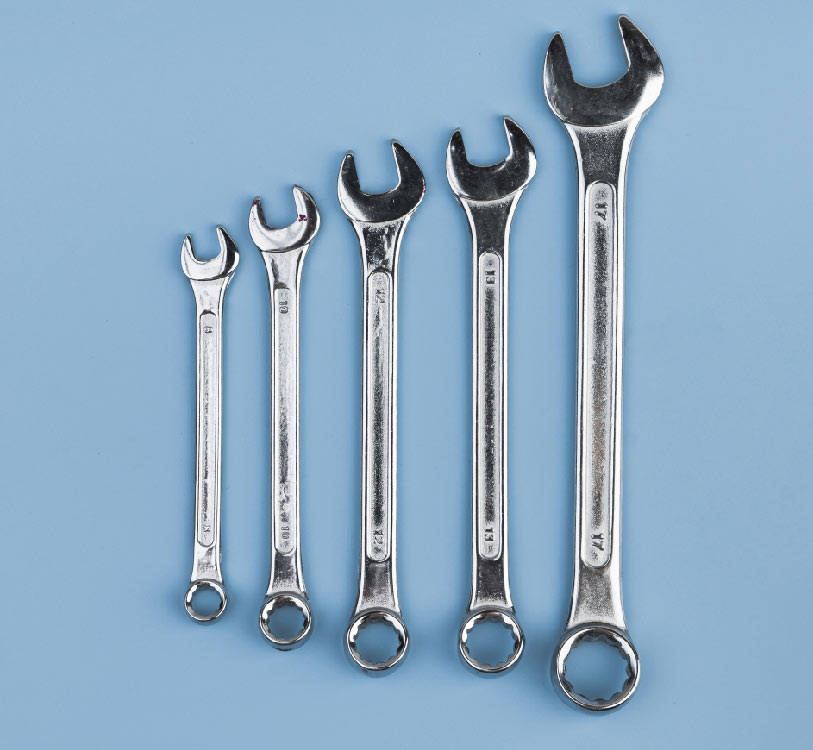
Different tool manufacturers may use vanadium in various ways to create tools tailored to their intended purposes.
Appearance
A silvery metal that resists corrosion.
Uses
In the vast realm of metals and alloys, vanadium shines as a remarkable element that has found its way into a multitude of applications. From enhancing the strength of steel to powering renewable energy storage, vanadium's versatility knows no bounds. In this article, we delve into the many uses of vanadium and how this unassuming metal is changing the landscape of various industries.
Vanadium steel, often referred to as "chrome vanadium" or "vanadium alloy steel," is renowned for its remarkable strength and durability. It's a crucial component in the production of high-quality tools such as wrenches, pliers, and screwdrivers. Vanadium's inclusion in these tools increases their tensile strength and wear resistance, ensuring they stand the test of time in demanding work environments.
The automotive industry also benefits from vanadium. It plays a pivotal role in creating resilient and durable automotive tools. From socket wrenches to impact sockets, vanadium steel ensures that these tools can withstand high levels of torque and repetitive use, making vehicle maintenance safer and more efficient.
When precision is paramount, vanadium comes to the forefront. This metal is often incorporated into cutting tools, including knives, blades, and scissors. The addition of vanadium enhances sharpness and edge retention, which is vital in various industries, from culinary arts to professional tailoring.
In the construction and building sectors, tools like hammers, chisels, and pry bars undergo rigorous use. Vanadium steel's durability and toughness make these tools indispensable on the job site, increasing productivity and ensuring safety.
Vanadium steel is an ideal choice for the production of industrial and mechanical tools. It's used in tool bits for machining processes such as turning, milling, and grinding. The hardness and wear resistance of vanadium steel are invaluable in maintaining precision and efficiency in manufacturing.
In the aerospace industry, where safety and performance are paramount, vanadium's exceptional strength-to-weight ratio makes it a key component in the construction of aircraft and spacecraft. It contributes to the development of lightweight yet incredibly robust materials used in critical aerospace components.
Vanadium's influence extends beyond conventional industries. It is a linchpin in the emerging field of energy storage, particularly in vanadium redox flow batteries (VRFBs). These batteries store energy in a chemical solution, making them ideal for renewable energy sources like wind and solar power. VRFBs are known for their long lifespan and ability to provide consistent power, revolutionizing the way we store and utilize energy.
Vanadium is also paving the way for cleaner energy production. In the form of vanadium-based catalysts, it plays a pivotal role in the development of green hydrogen production. By enabling more efficient and sustainable hydrogen generation, vanadium contributes to the reduction of greenhouse gas emissions and the transition to a more environmentally friendly energy landscape.
The world of technology continually evolves, and vanadium is playing a role in shaping the future. From advanced alloys in electronics to novel applications in nanotechnology, vanadium's unique properties are being harnessed to develop cutting-edge technologies that will change the way we live and work.
Vanadium compounds have also found their way into the medical field. Some studies suggest potential applications in treating various diseases, including diabetes. While further research is needed, the use of vanadium in medicine underscores its diverse potential.
Vanadium is a remarkable element that has woven itself into the fabric of modern industry and technology. Its strength, durability, and versatility make it an indispensable component in everything from hand tools to aerospace materials. Furthermore, its role in energy storage and clean energy production is helping us transition to a more sustainable and eco-friendly future. As technology advances, we can expect vanadium to play an even more significant role in shaping our world. It's a reminder that even the most unassuming elements can have a profound impact on our lives and our future.
The Power of Vanadium: Versatility in Modern Applications
In the vast realm of metals and alloys, vanadium shines as a remarkable element that has found its way into a multitude of applications. From enhancing the strength of steel to powering renewable energy storage, vanadium's versatility knows no bounds. In this article, we delve into the many uses of vanadium and how this unassuming metal is changing the landscape of various industries.
1. Strengthening Steel:
Vanadium steel, often referred to as "chrome vanadium" or "vanadium alloy steel," is renowned for its remarkable strength and durability. It's a crucial component in the production of high-quality tools such as wrenches, pliers, and screwdrivers. Vanadium's inclusion in these tools increases their tensile strength and wear resistance, ensuring they stand the test of time in demanding work environments.
2. Automotive Excellence:
The automotive industry also benefits from vanadium. It plays a pivotal role in creating resilient and durable automotive tools. From socket wrenches to impact sockets, vanadium steel ensures that these tools can withstand high levels of torque and repetitive use, making vehicle maintenance safer and more efficient.
3. Sharp Cutting Edge:
When precision is paramount, vanadium comes to the forefront. This metal is often incorporated into cutting tools, including knives, blades, and scissors. The addition of vanadium enhances sharpness and edge retention, which is vital in various industries, from culinary arts to professional tailoring.
4. Construction and Building:
In the construction and building sectors, tools like hammers, chisels, and pry bars undergo rigorous use. Vanadium steel's durability and toughness make these tools indispensable on the job site, increasing productivity and ensuring safety.
5. Industrial and Mechanical Tools:
Vanadium steel is an ideal choice for the production of industrial and mechanical tools. It's used in tool bits for machining processes such as turning, milling, and grinding. The hardness and wear resistance of vanadium steel are invaluable in maintaining precision and efficiency in manufacturing.
6. Aerospace Applications:
In the aerospace industry, where safety and performance are paramount, vanadium's exceptional strength-to-weight ratio makes it a key component in the construction of aircraft and spacecraft. It contributes to the development of lightweight yet incredibly robust materials used in critical aerospace components.
7. Energy Storage Revolution:
Vanadium's influence extends beyond conventional industries. It is a linchpin in the emerging field of energy storage, particularly in vanadium redox flow batteries (VRFBs). These batteries store energy in a chemical solution, making them ideal for renewable energy sources like wind and solar power. VRFBs are known for their long lifespan and ability to provide consistent power, revolutionizing the way we store and utilize energy.
8. Clean Energy Production:
Vanadium is also paving the way for cleaner energy production. In the form of vanadium-based catalysts, it plays a pivotal role in the development of green hydrogen production. By enabling more efficient and sustainable hydrogen generation, vanadium contributes to the reduction of greenhouse gas emissions and the transition to a more environmentally friendly energy landscape.
9. Emerging Technologies:
The world of technology continually evolves, and vanadium is playing a role in shaping the future. From advanced alloys in electronics to novel applications in nanotechnology, vanadium's unique properties are being harnessed to develop cutting-edge technologies that will change the way we live and work.
10. Medical Advancements:
Vanadium compounds have also found their way into the medical field. Some studies suggest potential applications in treating various diseases, including diabetes. While further research is needed, the use of vanadium in medicine underscores its diverse potential.
Conclusion
Vanadium is a remarkable element that has woven itself into the fabric of modern industry and technology. Its strength, durability, and versatility make it an indispensable component in everything from hand tools to aerospace materials. Furthermore, its role in energy storage and clean energy production is helping us transition to a more sustainable and eco-friendly future. As technology advances, we can expect vanadium to play an even more significant role in shaping our world. It's a reminder that even the most unassuming elements can have a profound impact on our lives and our future.
History
Vanadium, the unassuming 'V' on the periodic table, has a history as rich and varied as the applications it finds itself in today. From its discovery to its vital role in modern technology, vanadium's journey through time is a fascinating tale of scientific curiosity, industrial innovation, and technological progress.
Discovery and Early Observations
Vanadium made its debut in the world of elements in the early 19th century. In 1801, a Spanish mineralogist named Andrés Manuel del Río discovered vanadium-containing red lead ore in Mexico. Del Río initially believed he had found a new element and named it "erythronium." However, his claims were met with skepticism and eventually dismissed due to the lack of conclusive evidence.
It wasn't until 1830 that Swedish chemist Nils Gabriel Sefström rediscovered vanadium independently. Sefström, while analyzing iron ores, isolated a new element that he named "vanadium" in honor of the Scandinavian goddess of beauty, youth, and fertility, Vanadís. Sefström's work solidified vanadium's place in the world of chemistry.
Chemical Characteristics Unveiled
Following its discovery, chemists began to explore vanadium's properties and characteristics. They found that vanadium possessed intriguing qualities. It is a transition metal with a bluish-silver hue and excellent corrosion resistance, making it valuable for various applications. Moreover, vanadium exhibits multiple oxidation states, which means it can form various compounds with different properties.
Vanadium in Alloys
Vanadium's journey into industrial applications began in the late 19th century. One of its earliest uses was in the production of high-strength steel alloys. Vanadium steel, also known as "ferrovanadium," gained recognition for its ability to enhance the strength and durability of steel. It was used in applications such as tool manufacturing, automotive components, and even the construction of bridges and buildings. Vanadium steel quickly became synonymous with reliability and longevity.
Vanadium and Metallurgy
In the realm of metallurgy, vanadium found a crucial role. Its affinity for forming stable compounds with other elements made it an excellent addition in the production of titanium alloys. Vanadium-titanium alloys are renowned for their high strength, low weight, and resistance to corrosion, making them a staple in aerospace and defense applications. Vanadium's contribution to the development of lightweight, yet incredibly strong materials was pivotal in shaping modern aviation and space exploration.
Vanadium in the Nuclear Age
Vanadium's versatility didn't go unnoticed in the field of nuclear energy. It was used to manufacture reactor components, where its exceptional resistance to corrosion under high-temperature and high-pressure conditions played a vital role in ensuring the safety and longevity of nuclear reactors.
A Role in Clean Energy
As the world's focus shifted toward sustainable energy solutions, vanadium found itself at the forefront of innovation. Vanadium redox flow batteries (VRFBs) emerged as a key player in energy storage for renewable sources such as wind and solar power. VRFBs store energy in a chemical solution, offering a long cycle life and the ability to provide consistent power. They are seen as a promising solution for addressing the intermittency of renewable energy sources and improving grid stability.
Vanadium's Potential in Medicine
Beyond industry and energy, vanadium's unique properties have sparked interest in the medical field. Some studies suggest potential applications of vanadium compounds in the treatment of certain diseases, including diabetes. While research in this area is ongoing, it highlights vanadium's versatility in unexpected domains.
Vanadium Today
In the 21st century, vanadium continues to be a crucial component in various industries. Its applications extend to cutting-edge technologies, advanced alloys in electronics, and emerging fields such as nanotechnology. As our technological landscape evolves, vanadium stands poised to play an even more significant role in shaping the future.
The history of vanadium is a testament to human curiosity and ingenuity. From its serendipitous discovery to its widespread applications in diverse industries, vanadium has left an indelible mark on the world of science and technology. Its remarkable properties and versatility make it a valuable element, one that continues to push the boundaries of what's possible in engineering, energy, and beyond. As we look to a future driven by innovation and sustainability, vanadium remains a steadfast ally in our pursuit of progress.
Atomic Data
Atomic Radiues, Non-bonded (A): 2.07
Electron Affinity (kJ mol-1): 50.655
Covalent Radiues (A): 1.44
Electronegativity (Pauling Scale): 1.63
| Ionisation Energies (kJ mol-1) | 1st | 2nd | 3rd | 4th | 5th | 6th | 7th | 8th |
|---|---|---|---|---|---|---|---|---|
| 650.908 | 1410.423 | 2828.082 | 4506.734 | 6298.727 | 12362.67 | 14530.7 | 16730.6 |
Oxidation States and Isotopes
Common oxidation states 1
| Isotope | Atomic Mass | Natural Abundance | Half Life | Mode of Decay |
|---|---|---|---|---|
| 50V | 49.947 | 0.25 | 1.4 x 10¹⁷ y | EC |
| 51V | 50.944 | 99.75 | - | - |
Supply Risk
Relative Supply Risk: 6.7
Crustal Abundance (ppm): 138
Recycle Rate (%): <10
Production Conc.(%) : 34
Top 3 Producers:
1) South Africa
2) China
3) Russia
1) South Africa
2) China
3) Russia
Top 3 Reserve Holders:
1) China
2) Russia
3) South Africa
1) China
2) Russia
3) South Africa
Substitutability: Low
Political Stability of Top Producer: 44.3
Political Stability of Top Reserve Holder: 24.1
Pressure and Temperature Data
Specific Heat Capacity: 489
Shear Modulus: 46.7
Young Modulus: 127.6
Bulk Modulus: 158.0
| Pressure 400k | Pressure 600k | Pressure 800k | Pressure 1000k | Pressure 1200k | Pressure 1400k | Pressure 1600k | Pressure 1800k | Pressure 2000k | Pressure 2200k | Pressure 2400k |
|---|---|---|---|---|---|---|---|---|---|---|
| - | - | - | - | 2.79 x 10⁻¹⁰ | 4.35 x 10⁻⁷ | 0.000107 | 0.00769 | 0.233 | 3.68 | 158.0 |
Podcast
| Listen to Vanadium Podcast |
Transcript:
Vanadium is a chemical element that is a comparatively abundant metal. It is a transitional metal that may be described as having a metallic appearance similar to that of silver-gray. It belongs to Group 5 (Vb) of the periodic table. Vanadium has been studied extensively since it was discovered. However, its complex redox-related chemistry has been difficult to understand. This element is a polyvalent transition metal. It has two naturally occurring isotopes, 49V and 51V. The 49V is the most stable synthetic isotope and has a half-life of 330 days. Moreover, this metal has a relatively low cost, which is why Vanadium is a popular metal in many parts of the world. Producing a metal of such high quality is an extremely challenging endeavor. Rather, this element is often obtained by mixing other metals.
It has an octahedral geometry and a variety of complexes are formed in different biological systems. Vanadium compounds have also been investigated for their potential therapeutic applications. The most important biological ligand for vanadium is the amino acid. In the subject of vanadium-amino acid systems, there have been a number of investigations carried out. These studies have been carried out using a range of techniques, such as circular dichroism, UV/Visible molecular absorption, and nuclear magnetic resonance.
Vanadium complexes can be ternary or binary. They are formed through coordination bonds. Pearson's theory of soft acids describes these bonds. Vanadium ions can be reduced to hydrogen in aqueous solutions. Various oxidant and reductant complexes are formed with V ions. Understanding the complexation system between these ions and oxidants is crucial for further studies.
This metallic element was discovered in 1801 by Spanish scientist Andres Manuel del Rio. Del Rio was working in Mexico City when he discovered vanadium in a mineral called vanadite. He sent some samples to the French government's research center in Paris.
Upon the French chemist Hippolyte-Victor Collet-Descotils' announcement that vanadium was impure chromium, Del Rio retracted his claim. It was a mistake for the scientist to make such comment.
In 1831, Nils Gabriel Sefstrom rediscovered vanadium. A few years later, Swedish chemist Nils Gabriel Sefstrom isolated vanadium from iron ore that was taken from a mine in Sweden. He also analyzed the element in a newly discovered lead-bearing mineral. After making the finding, he decided to name the substance after Vanadis, a Norse goddess associated with beauty.
Although vanadium was discovered and isolated in the early nineteenth century, it was not commercially available until about 1922.
Vanadium is an element that is found in nature in several minerals. However, pure vanadium is rare. This element is often found in compounds. Vanadium is the twenty-second most common element in the Crust of the nature. It is a common element in oil, coal, and crude oil.
There are 65 types of mineral that contain vanadium. Among them, the most common are Roscoelite, Carnotite, Vanadinite, and phosphate rocks. In addition, vanadium is a byproduct of uranium mining and smelting. It may be found in a wide range of minerals as well as fossil fuels. Vanadium is commercially produced in Venezuela, South Africa, Mexico, The largest global producer of vanadium is China. This element is produced in this nation at a rate that accounts for 98% of the global supply. There are several different mineral formations that include vanadium, such as rocks that are rich in phosphate. This element is rarely found free in nature. Another substance that contains vanadium is Vanadinite. These salts darken aniline black solutions
Vanadium has a variety of components and characteristics that are one of a kind, including the ability to be shaped. Vanadium is a ductile, metallic element with a silvery-grey metallic appearance. This element is known for its soft metallic feel, high strength and good structural properties. It is resistive to the corrosive effects of hydrochloric acid and sulfuric acid. On the other hand, it has a modest level of toxicity. A very pure form of the metal is very hard and resembles titanium. The chemical properties of vanadium are varied. Vanadium is a moderately reactive metal, but it is not particularly reactive with oxygen at room temperature. It absorbs 1.3 percent of hydrogen weight, a figure that increases with temperature and time of contact. Vanadium is not stable at high temperatures,
The metal known as vanadium is useful in a wide variety of contexts. Among the most common uses for this metal is in the production of dynamite. Ceramics, steel production, and battery manufacturing are among of the businesses that make use of it. In addition to that, this element is used in the production of sulfuric acid.
Vanadium is frequently used in the chemicals industry as a stabilizers for a wide range of different chemicals. This element is also used as a catalyst for catalytic processes such as oxidation of organic compounds. It has a variety of biological applications as well. Additionally, Vanadium is used in the manufacturing of high-speed tool steel as well as cast iron that is resistant to wear. This element is also alloyed with iron to form an alloy called vanadium-iron. One of the main uses of vanadium is in alloy steel. This metallic material has helped develop a number of industries and is a vital component of aircraft, automobiles, and space travel. Its alloys can also be used in the cathodes of batteries for electric vehicles. In addition to these applications, vanadium compounds are also used in the manufacture of polyamides such as nylon and as catalysts in sulfuric acid manufacturing.
In the late 19th century, Henry Ford became interested in the use of vanadium in his Model T. He incorporated it in the chassis of his car. Vanadium oxide compounds are widely used as chemical catalysts in organic chemistry. Vanadium pentoxide as a catalyst in many chemical reactions. Vanadium is used in the oxidation of naphthalene to phthalic acid. It is also widely used for the oxidation of aromatic hydrocarbons. One of the applications of vanadium is in the production of redox flow batteries. These batteries have an almost unlimited capacity and are nonflammable. They can be recharged by replacing the electrolyte. They are the most efficient batteries available today.
Another potential application of vanadium is in the field of aerospace technology. There are several types of alloys that can be made with vanadium. These alloys have low neutron-absorbing properties and are used in nuclear reactors. In addition, vanadium is used in thermochromic fenestration systems. These materials can help control the reflectivity of metal surfaces.
References
- W. M. Haynes, ed., CRC Handbook of Chemistry and Physics, CRC Press/Taylor and Francis, Boca Raton, FL, 95th Edition, Internet Version 2015, accessed December 2014.
- Tables of Physical & Chemical Constants, Kaye & Laby Online, 16th edition, 1995. Version 1.0 (2005), accessed December 2014.
- J. S. Coursey, D. J. Schwab, J. J. Tsai, and R. A. Dragoset, Atomic Weights and Isotopic Compositions (version 4.1), 2015, National Institute of Standards and Technology, Gaithersburg, MD, accessed November 2016.
- T. L. Cottrell, The Strengths of Chemical Bonds, Butterworth, London, 1954.
- John Emsley, Nature’s Building Blocks: An A-Z Guide to the Elements, Oxford University Press, New York, 2nd Edition, 2011.
- Thomas Jefferson National Accelerator Facility - Office of Science Education, It’s Elemental - The Periodic Table of Elements, accessed December 2014.
Explore other Chemical Elements
Actinium
Aluminum
Americium
Antimony
Argon
Arsenic
Astatine
Barium
Berkelium
Beryllium
Bismuth
Bohrium
Boron
Bromine
Cadmium
Caesium
Calcium
Californium
Carbon
Cerium
Chlorine
Chromium
Cobalt
Copernicium
Copper
Curium
Darmstadtium
Dubnium
Dysprosium
Einsteinium
Erbiums
Europium
Fermium
Flerovium
Fluorine
Francium
Gadolinium
Gallium
Germanium
Gold
Hafnium
Hassium
Helium
Holmium
Hydrogen
Indium
Iodine
Iridium
Iron
Krypton
Lanthanum
Lawrencium
Lead
Lithium
Livermorium
Lutetium
Magnesium
Manganese
Meitnerium
Mendelevium
Mercury
Molybdenum
Moscovium
Neodymium
Neon
Neptunium
Nickel
Nihonium
Niobium
Nitrogen
Nobelium
Oganesson
Osmium
Oxygen
Palladium
Phosphorus
Platinum
Plutonium
Polonium
Potassium
Praseodymium
Promethium
Protactinium
Radium
Radon
Rhenium
Rhodium
Roentgenium
Rubidium
Ruthenium
Rutherfordium
Samarium
Scandium
Seaborgium
Selenium
Silicon
Silver
Sodium
Strontium
Sulfur
Tantalum
Technetium
Tellurium
Tennessine
Terbium
Thallium
Thorium
Thulium
Tin
Titanium
Tungsten
Uranium
Vanadium
Xenon
Ytterbium
Yttrium
Zinc
Zirconium