
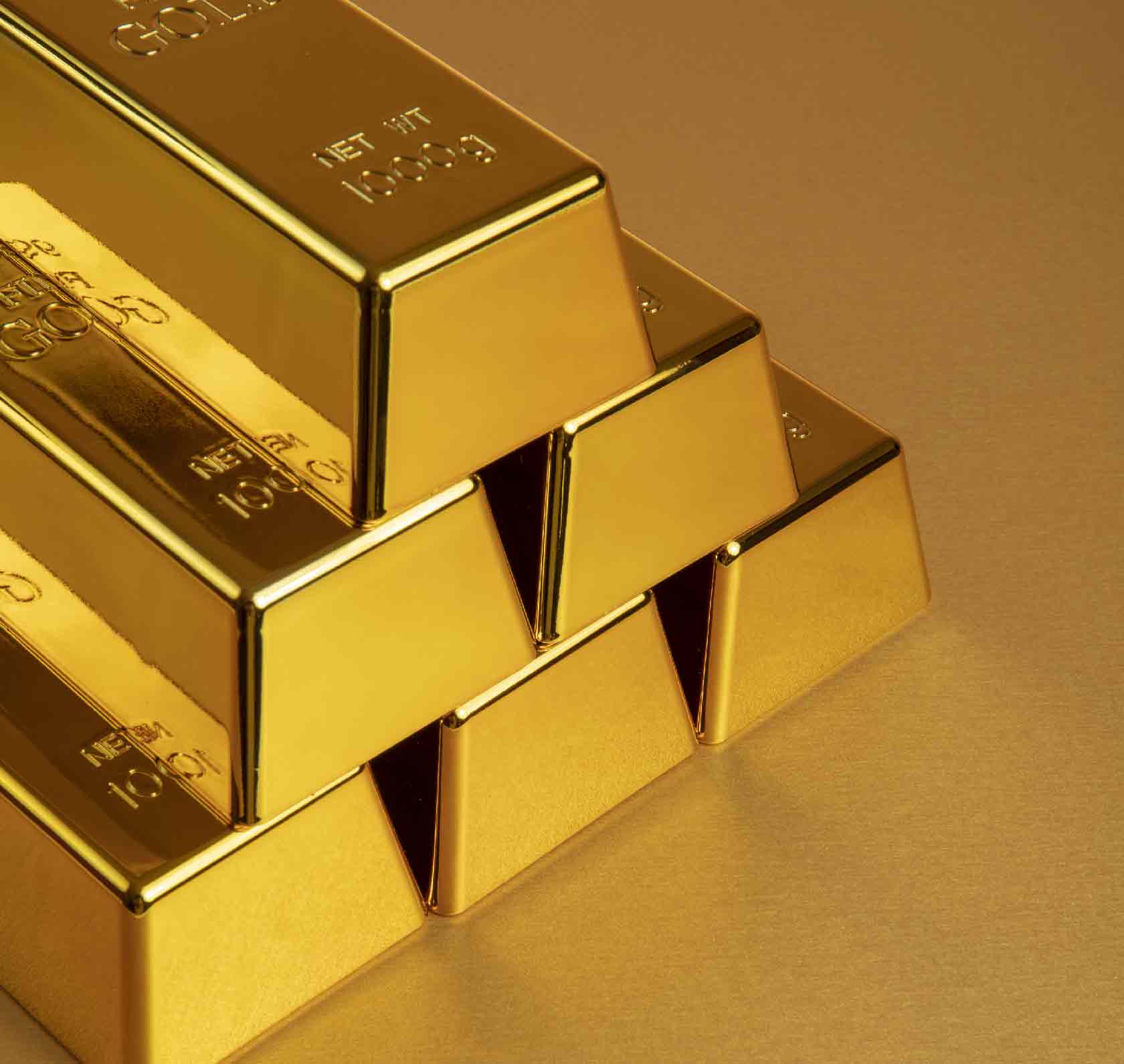

Uses and Properties
Gold, exhibiting minimal reactivity, typically remains inert to oxygen, water, and acids, retaining its radiant luster. Renowned for its high ductility and malleability, gold finds extensive use in jewelry crafting, capitalizing on its exceptional properties for exquisite designs.
A soft metal with a characteristic yellow colour. It is chemically unreactive, although it will dissolve in aqua regia (a mixture of nitric and hydrochloric acids).
Gold: Beyond Ornamentation, Unveiling the Diverse Uses of a Precious Metal
Gold, with its timeless allure and captivating luster, has held a revered place in human culture for millennia. While its association with jewelry is well-established, the multifaceted uses of gold extend far beyond ornamental embellishments. From advanced technology to medicine and finance, gold plays a pivotal role in diverse industries, showcasing its versatility and enduring value. Join us as we unravel the myriad uses of gold, exploring the precious metal's contributions to modern society.
1. Jewelry: A Radiant Symbol of Elegance
The most iconic use of gold remains its role in jewelry. Revered for its enduring beauty, gold's malleability and ductility make it the perfect canvas for intricate designs. From dazzling rings and necklaces to intricate bracelets and earrings, gold adorns individuals with a radiant symbol of elegance. The inherent value and cultural significance associated with gold jewelry make it a timeless and cherished accessory across cultures and civilizations.
2. Electronics: Powering Innovation
Gold's conductivity and resistance to corrosion make it an essential component in the electronics industry. It is used to create thin layers on connectors and switches within electronic devices, ensuring reliable conductivity over time. Gold's reliability in transmitting electrical signals makes it a crucial element in everything from smartphones and computers to aerospace technology and medical devices.
3. Medicine: A Touch of Healing
In the field of medicine, gold takes on a role that goes beyond aesthetics. Gold nanoparticles are being explored for their potential applications in targeted drug delivery and imaging. Additionally, gold compounds, such as Auranofin, have been used as anti-inflammatory agents in the treatment of rheumatoid arthritis. The unique properties of gold contribute to its potential in advancing medical research and treatments.
4. Space Exploration: A Shimmering Frontier
As humanity reaches for the stars, gold finds its place in the realm of space exploration. The exceptional reflective properties of gold make it an ideal coating for satellite components and astronaut visors, protecting against the harsh effects of solar radiation. Gold's contribution to space exploration extends to the delicate instruments on spacecraft, ensuring accurate data transmission and reception.
5. Finance: A Pillar of Stability
Beyond its tangible allure, gold has served as a symbol of wealth and a store of value throughout history. In the world of finance, gold remains a pillar of stability. Central banks and investors alike turn to gold as a safe-haven asset during times of economic uncertainty. Gold's ability to retain value over time has made it a cornerstone in investment portfolios, providing a hedge against inflation and currency fluctuations.
6. Dentistry: A Gleaming Contribution to Oral Health
Gold has a longstanding history in dentistry, where its biocompatibility and resistance to corrosion make it an ideal material for dental restorations. Gold alloys are often used in crowns, bridges, and other dental prosthetics. The inert nature of gold ensures a durable and safe option for dental work, contributing to the field of oral health.
7. Nanotechnology: The Small Wonders of Gold
In the burgeoning field of nanotechnology, gold nanoparticles have emerged as versatile tools. Their unique optical and electronic properties make them valuable in applications such as targeted drug delivery, imaging, and diagnostics. Gold's compatibility with biological systems opens avenues for innovative solutions in healthcare and materials science.
8. Art and Craftsmanship: A Medium of Mastery
Gold leaf, created by hammering gold into thin sheets, has been a medium of artistic expression for centuries. Used in religious art, manuscripts, and ornate decorations, gold leaf adds a touch of opulence and brilliance to diverse artistic creations. The skillful craftsmanship involved in working with gold reflects the enduring appreciation for this precious metal in the world of art.
9. Environmental Applications: A Green Catalyst
In recent years, gold nanoparticles have found applications in environmental science. They are explored for their catalytic properties in the removal of pollutants from air and water. Gold's unique ability to catalyze chemical reactions holds promise for developing eco-friendly solutions to address environmental challenges.
10. Awards and Honors: A Symbol of Excellence
Gold's symbolic association with excellence and achievement extends to awards and honors. Gold medals, trophies, and certificates symbolize success and recognition in various fields, from sports to academia. The enduring prestige associated with gold reinforces its role as a symbol of distinction.
Conclusion
Gold, often celebrated for its aesthetic brilliance, transcends the realm of ornamentation to emerge as a versatile and indispensable metal in modern society. From powering our electronic devices to contributing to medical advancements and symbolizing wealth and achievement, gold's multifaceted uses underscore its enduring relevance. As we navigate the complexities of the 21st century, gold continues to shine brightly as a symbol of elegance, innovation, and enduring value.
History
The history of Gold (Au) is a tale woven into the fabric of human civilization, spanning epochs and civilizations, leaving an indelible mark on culture, commerce, and conquest. Revered for its shimmering allure and intrinsic value, Gold has been coveted, mined, and traded since antiquity. Join us as we embark on a gilded journey through the annals of history, tracing the evolution of Gold from its discovery to its pivotal role in shaping the destinies of nations.
1. Ancient Beginnings: The Mesopotamian Shimmer
The story of Gold begins in the cradle of civilization, Mesopotamia, where the first civilizations emerged around 4500 BCE. Mesopotamian cultures, including the Sumerians and Akkadians, recognized Gold's lustrous beauty and rarity. Gold became a symbol of wealth, power, and divinity, adorning the palaces of kings and temples of gods.
2. Egyptian Elegance: The Gold of the Pharaohs
In the grand tapestry of Gold's history, ancient Egypt stands out as a beacon of opulence and sophistication. Gold held a sacred status in Egyptian society, associated with the sun god Ra and the afterlife. The famous burial mask of Tutankhamun, crafted with Gold and precious gemstones, remains an iconic symbol of Egyptian craftsmanship and the eternal allure of Gold.
3. Greek and Roman Splendor: Currency of Empires
As the influence of Greek and Roman civilizations expanded, so did the prominence of Gold. Both cultures utilized Gold coins as a form of currency, facilitating trade and commerce across vast empires. Gold became a symbol of imperial wealth and opulence, adorning temples, statues, and the laurel wreaths of victorious leaders.
4. Silk Road Splendors: Trade Routes of Gold
The Silk Road, the ancient network of trade routes connecting East and West, became a conduit for the flow of Gold. The opulent courts of China, Persia, and the Byzantine Empire exchanged Gold along this intricate web of commerce. Gold's rarity and universal appeal fueled its desirability among diverse cultures.
5. The Age of Exploration: New Worlds, New Gold
The Age of Exploration in the 15th and 16th centuries marked a turning point in the history of Gold. European explorers, driven by the quest for riches, discovered vast quantities of Gold in the Americas. The legendary city of El Dorado, adorned with Gold, captured the imaginations of explorers seeking untold wealth in the New World.
6. Gold Rush Fever: Panning for Prosperity
In the 19th century, Gold fever gripped the hearts of prospectors seeking fortune in the unexplored territories of the Americas, Australia, and South Africa. The California Gold Rush of 1848 and subsequent rushes transformed landscapes and communities, leaving an enduring legacy of Gold mining and settlement.
7. The Gold Standard: Currency and Stability
The 19th century also witnessed the establishment of the Gold standard, a monetary system tying national currencies to a fixed quantity of Gold. This system provided stability and confidence in financial transactions, shaping the global economy for decades. The allure of Gold as a reliable store of value solidified its role in international trade.
8. Wars and Reserves: Gold's Strategic Role
Gold's strategic significance became evident during times of conflict. Nations stockpiled Gold reserves as a hedge against economic instability and wartime uncertainties. Fort Knox, in the United States, and other repositories around the world became synonymous with the safekeeping of national treasures in the form of Gold bullion.
9. Modern Gold Markets: Global Trading Hubs
In the contemporary era, Gold has evolved into a globally traded commodity. Major financial hubs, such as London, New York, and Zurich, host active Gold markets where investors and institutions trade Gold futures, options, and physical bullion. The price of Gold remains a barometer of economic health and investor sentiment.
10. Cultural Symbolism and Innovation: Gold in the 21st Century
Beyond its monetary and economic roles, Gold continues to captivate as a cultural symbol and a driver of innovation. From the gilded towers of modern architecture to the intricate circuitry of electronic devices, Gold's conductivity and malleability contribute to diverse fields. It remains an enduring symbol of wealth, status, and the pinnacle of human achievement.
Conclusion
The history of Gold unfolds as a saga of human fascination, conquest, and prosperity. From the temples of ancient civilizations to the trading floors of modern financial markets, Gold has retained its status as the epitome of wealth and elegance. As we gaze upon the gilded artifacts of history, we witness the enduring majesty of Gold, a precious metal that has shaped the destiny of nations and continues to glisten in the fabric of our collective consciousness.
Atomic Data
| Ionisation Energies (kJ mol-1) | 1st | 2nd | 3rd | 4th | 5th | 6th | 7th | 8th |
|---|---|---|---|---|---|---|---|---|
| 890.128 | 1949 | - | - | - | - | - | - |
Oxidation States and Isotopes
| Isotope | Atomic Mass | Natural Abundance | Half Life | Mode of Decay |
|---|---|---|---|---|
| 197Au | 196.967 | 100 | - | - |
| 198Au | 197.968 | - | 2.695 d | β- |
Supply Risk
1) China
2) Australia
3) USA
1) Australia
2) South Africa
3) Russia
Pressure and Temperature Data
| Pressure 400k | Pressure 600k | Pressure 800k | Pressure 1000k | Pressure 1200k | Pressure 1400k | Pressure 1600k | Pressure 1800k | Pressure 2000k | Pressure 2200k | Pressure 2400k |
|---|---|---|---|---|---|---|---|---|---|---|
| - | - | - | 3.72 x 10⁻⁸ | 5.44 x 10⁻⁵ | 0.0092 | 0.374 | 6.68 | 67 | - | 217.0 |
Podcast
Welcome Dear listeners, to another episode of "Talking About Elements," the podcast that journeys through the ages to uncover the timeless allure of Gold. Today, we delve deep into the heart of this precious metal, exploring its captivating history, remarkable properties, natural occurrence, intricate production processes, and its diverse array of applications.
Our golden journey begins with a glance back at the rich history of this illustrious metal. Gold has been cherished by civilizations throughout time for its mesmerizing beauty, rarity, and intrinsic value. Its story is interwoven with the rise and fall of empires, the pursuit of wealth, and the desire for beauty and adornment.
The earliest evidence of gold being used by humans dates back to ancient Egypt, where it was crafted into exquisite jewelry and burial artifacts for pharaohs. Gold's universal appeal transcends cultures and eras, making it a symbol of wealth, power, and prestige.
Gold, with its remarkable properties, stands as a testament to nature's alchemy:
Gold's unmistakable luster, a warm and radiant hue, has captivated the human imagination for millennia. It is this natural brilliance that makes it a treasure among metals.
Gold is the most malleable and ductile of all metals, allowing it to be effortlessly shaped into intricate designs, delicate filigree, and even tissue-thin sheets known as gold leaf.
Gold is virtually impervious to corrosion, oxidation, or tarnishing. This exceptional stability ensures that gold retains its luster and beauty over time.
Gold is one of the densest naturally occurring elements, making it an ideal material for coinage and heavy jewelry.
The occurrence of Gold in nature is a testament to its rarity. Gold is found in various geological formations, often associated with quartz, pyrite, and other minerals. It can be discovered in riverbeds as alluvial gold, in quartz veins as lode gold, or even deep underground in hard-rock mines.
The iconic Gold Rushes of the 19th century, such as the California Gold Rush and the Klondike Gold Rush, bear witness to the lengths humans have gone to seek out this precious metal.
The production of Gold is a meticulous and intricate process. It involves a series of steps to transform raw ore into the glittering metal we treasure:
Gold ore is extracted from deposits through various methods, including open-pit mining, underground mining, and placer mining.
The extracted ore is crushed into smaller pieces and ground into a fine powder to increase its surface area for subsequent processing.
The powdered ore undergoes a process called cyanidation, where a cyanide solution is used to dissolve the Gold. This results in a Gold-containing liquid known as a "pregnant" solution.
The Gold is then precipitated out of the solution using chemicals like zinc or activated carbon. This precipitate is melted and further refined to remove impurities, resulting in high-purity Gold.
Gold's versatility extends beyond its aesthetic appeal. It plays a vital role in numerous applications:
Gold has long been used as a form of currency and store of value. Central banks and investors continue to hold Gold reserves as a hedge against economic instability.
Gold remains the foremost choice for crafting fine jewelry, from rings and necklaces to earrings and bracelets. Its timeless allure adds elegance to any piece.
Gold's exceptional conductivity makes it indispensable in electronic components, including connectors, switches, and printed circuit boards.
Gold nanoparticles are employed in cancer treatment and diagnostics. They are used in targeted drug delivery and imaging techniques.
Gold is used in spacecraft components, such as thermal insulation and reflective coatings, due to its ability to withstand extreme temperatures and radiation.
Gold alloys are widely used in dental restorations, crowns, and bridges due to their biocompatibility and durability.
Gold leaf is used for gilding artworks, manuscripts, and architectural details to create stunning, lasting effects.
In conclusion, Gold's allure transcends time and borders, resonating with the human spirit on a deep level. Its remarkable properties, scarcity in nature, and diverse applications have cemented its place as one of the most cherished and sought-after elements in the world.
As we journey through history and explore the diverse facets of Gold, may we be reminded of its enduring legacy, from the glint in a jewelry box to the wealth held in the vaults of nations.
Thank you for joining us on this exploration of Gold. If you found this episode enlightening, please subscribe, share, and leave a review. Stay tuned for more episodes as we continue to uncover the timeless treasures hidden within the elements. Until next time, keep exploring and discovering the marvels of the world.
References
- W. M. Haynes, ed., CRC Handbook of Chemistry and Physics, CRC Press/Taylor and Francis, Boca Raton, FL, 95th Edition, Internet Version 2015, accessed December 2014.
- Tables of Physical & Chemical Constants, Kaye & Laby Online, 16th edition, 1995. Version 1.0 (2005), accessed December 2014.
- J. S. Coursey, D. J. Schwab, J. J. Tsai, and R. A. Dragoset, Atomic Weights and Isotopic Compositions (version 4.1), 2015, National Institute of Standards and Technology, Gaithersburg, MD, accessed November 2016.
- T. L. Cottrell, The Strengths of Chemical Bonds, Butterworth, London, 1954.
- John Emsley, Nature’s Building Blocks: An A-Z Guide to the Elements, Oxford University Press, New York, 2nd Edition, 2011.